lunes, 15 de abril de 2019

DAY BY DAY III

POINTILLISM

3rd with teacher Leone

The students of this group are closing the Post-Impressionism chapter by carrying out a practical exercise with the work "Sunday afternoon on the island of La Grande Jatte" (1884-1886) by Georges Pierre Seurat, in which they have part of the work to be able to reproduce it faithfully. Then, using the pointillist style in which paint points of basic colors are juxtaposed to obtain the desired mixing effect in the eyes of the viewer, they make the copy of the  chosen part of the art work. They will use colored markers to perform this exercise of precision and patience.


PUNTILLISMO

3º con el profesor Leone

Los alumnos de este grupo están cerrando el capítulo del Postimpresionismo realizando un ejercicio práctico con la obra “Tarde de domingo en la isla de la Grande Jatte” (1884-1886) de Georges Pierre Seurat, en el que han cuadriculado una parte de la obra para poder reproducirla con fidelidad. Luego, utilizando el estilo puntillista en el que se yuxtaponen puntos de pintura de colores básicos para conseguir a los ojos del espectador el efecto de mezcla deseado, realizan la copia de la parte elegida de la obra. Ellos utilizarán rotuladores de colores para realizar este ejercicio de precisión y paciencia.


ART NOUVEAU

3rd with teacher Luigia

One of the groups of 3rd grade is working on Art Nouveau through design and fashion. After meeting artists like Klimt, they are introduced to an activity in which using the pages of a fashion magazine in which full-length characters appear, discard the clothes they wear to make their own designs. On black cardboard draw the silhouette, before cutting the clothes, and then draw in pure Klimt style stamped in gold and other colors of the palette of the artist.

ART NOUVEAU

3º con la profesora Luigia

Uno de los grupos de alumnos de 3º están trabajando el Art Nouveau a través del diseño y la moda. Tras conocer a artistas como Klimt, se les introduce en una actividad en la que utilizando las páginas de una revista de moda en la que aparecen personajes de cuerpo entero, descartan la ropa que llevan para realizar sus propios diseños. Sobre cartulina negra dibujan la silueta, antes de recortar la ropa, y luego dibujan al puro estilo Klimt estampados en dorado y otros colores de la paleta del artista.


ART BOOK

3rd with teacher Luigia

They prepare a book with all their papers for the exam they make at the end of the first grade. For this they design a cover with the name ART BOOK using an artistic typography. To work on typography they search on the internet for a type of letter that they like, they project it on the digital board giving it the size they need for their book and they trace it. Other students prefer to venture with their own typography design and create something different.

ART BOOK

3º con la profesora Luigia

Para el examen que hacen al final del primer grado de secundaria preparan un libro con todos sus trabajos. Para ello diseñan una portada con el nombre ART BOOK utilizando una tipografía artística. Para trabajar la tipografía buscan en internet un tipo de letra que les guste, la proyectan en la pizarra digital dándole el tamaño que necesitan para su libro y la calcan. Otros alumnos prefieren aventurarse con su propio diseño de tipografía y crear algo diferente.


20TH CENTURY AVANT-GARDE ART MOVEMENT

3rd with teacher Patrizia

Futurism, Expressionism, Cubism, Abstraction, Surrealism ... One by one they get to know and deepen the 20th century avant-garde art movement, so important in the conceptual evolution of art from the 20th century. Later the students work in a practical way Futurism with the development of a work based on movement and dynamism. Then, they develop a work inspired by "the free word" in the style of the futurist writer Marinetti, superimposing the plastic part on the written word highlighting the text, in this case Martin Luther King's speech "I have a dream", the part that more motivates and inspires them to carry out their work.

MOVIMIENTOS DE VANGUARDIA DEL SIGLO XX

3º con la profesora Patrizia

Futurismo, Expresionismo, Cubismo, Abstracción, Surrealismo… Uno a uno van conociendo y profundizando en los Movimientos de Vanguardia, tan importantes en la evolución conceptual del arte a partir del siglo XX. Los alumnos trabajan posteriormente de manera práctica el futurismo con la elaboración de una obra basada en el movimiento y el dinamismo. Luego, desarrollan un trabajo inspirado en “la palabra libre” al estilo del escritor futurista Marinetti, superponiendo la parte plástica sobre la palabra escrita destacando del texto, en este caso del discurso de Martin Luther King “I have a dream”, la parte que más les motiva e inspira a realizar su obra.


DAY BY DAY II

THE PORTRAIT

2º with teacher Leone

It is in the Renaissance that the study of perspective and the canon of the human body acquire great importance in art. The 2nd graders begin to work with the canon of the face, using the image of the other as a model to carry out their work. Look at those characteristics that differentiate them and make them unique, maintain the proportion of the face and draw the features realistically. A work of observation and intense concentration. For assessing this practice, both drawer and model are assessed: the teacher reviews the proportions, the expression, the similarity with the model, the cleanliness of the work, ... and the drawer assesses the model, his attitude during the pose.

EL RETRATO

2º con el profesor Leone

Es en el Renacimiento que el estudio de la perspectiva y el canon del cuerpo humano adquieren en el arte una gran importancia. Los alumnos de 1º comienzan a trabajar con el canon del rostro, utilizando la imagen del otro como modelo para realizar sus trabajos. Fijarse en aquellas características que les diferencian y les hacen únicos, mantener la proporción del rostro y dibujar los rasgos de manera realista. Una labor de observación y concentración intensa. A la hora de evaluar esta práctica, tanto dibujante como modelo son evaluados: el profesor revisa las proporciones, la expresión, el parecido con el modelo, la limpieza del trabajo, … y el dibujante evalúa al modelo, su actitud durante el posado.


x

CONSTRUCTION OF AN OVAL TANGRAM

2nd with teacher Luigia

Today they are going to build a egg-shaped Tangram. For this, they have to practice drawing an oval, using the rules and the compass. Then, once they have drawn it, they finish defining the pieces that will make up the tangram, color it or give it textures, cut it out and build a figure. This activity is carried out individually but in groups, where everyone is helped and have the final goal of making a panel with the figures they have made. During the activity there is a soft music of oriental style that gives atmosphere to the classroom.

CONSTRUCCIÓN DE UN TANGRAM OVALADO

2º con la profesora Luigia

Hoy van a construir un Tangram con forma de huevo. Para ello, han de practicar dibujando un óvalo, utilizando las reglas y el compás. Luego, una vez lo han dibujado, terminan de definir las piezas que conformarán el tangram, lo colorean o dan texturas, lo recortan y construyen una figura. Esta actividad la realizan de manera individual pero en grupos, donde todos se ayudan y tienen el objetivo final de realizar un panel con las figuras que han realizado. Durante la actividad suena una música suave de estilo oriental que le da ambiente al aula.


THE LIGHTING

2nd with teacher Luigia
With this group, Professor Luigia begins to work on the illumination of three-dimensional objects with a very interesting practice in which the students have to build some letters with their hands, either their name or a short word. They have to get the letters to stay upright, for which they use adhesive tape or stick glue. After building their letters, they observe the natural light that enters through the window and identify the shadows that they project on the surface and how the light also illuminates them in a different way according to their position. Then, they draw on the paper on which the projected shadows have pasted them and represent these with pencil. Also, when they take off the letters, they draw them to make it look like they're still there. A very complete exercise of manipulation, observation and drawing.

LA ILUMINACIÓN

2º con la profesora Luigia

Con este grupo la profesora Luigia comienza a trabajar la iluminación de los objetos tridimensionales con una práctica muy interesante en la que los alumnos han de construir en papel con sus manos unas letras, ya sean las de su nombre o una palabra corta. Han de conseguir que las letras se mantengan de pie, para lo que utilizan cinta adhesiva o pegamento de barra. Tras construir sus letras, las observan a la luz natural que entra por la ventana e identifican las sombras que estas proyectan sobre la superficie y como la luz también las ilumina de una manera diferente según su posición. Después, dibujan sobre el papel en el que las han pegado las sombras proyectadas y representan estas con lápiz. También, cuando despegan las letras, las dibujan para que parezca que siguen ahí. Un ejercicio muy completo de manipulación, observación y dibujo.


DAY BY DAY I

HOW THE SUBJECT WORKS


In the Italian educational system, Art Education in secondary school begins in the first year of first grade. This first grade begins in what for our Spanish system would be 6th grade of Primary school, and develops over 3 years, so it would end in our 2nd of ESO.


From the first course the time that is dedicated to this subject is 2 hours per week with a specialist in Art Education. In the IC Raffaello Giovagnoli these 2 hours are taught consecutively, thus favoring the development of more complex processes. Within the curriculum of this subject art history has an important weight, being in fact the axis on which the entire teaching-learning process is based. On the other hand, the part dedicated to geometry is competence of Mathematics and Technology subjects.


In this post I am going to tell you some of the things that I’ve been seeing these weeks in the classes of the teachers that have welcomed me in their classroom during this experience and who have given me good great ideas to put into practice in the JABY School.


x

CÓMO FUNCIONA LA ASIGNATURA


En el sistema educativo italiano la Educación Artística en secundaria comienza en el primer curso del primer grado. Este primer grado empieza en lo que para nuestro sistema español sería 6° de Primaria, y se desarrolla a lo largo de 3 años, por lo que lo acabarían en nuestro 2º de ESO.


Desde el primer curso el tiempo que se le dedica a esta asignatura es de 2 horas semanales con un especialista en Educación Artística. En el IC Raffaello Giovagnoli estas 2 horas se imparten consecutivamente, favoreciendo de este modo el desarrollo de procesos más complejos. Dentro del currículum de esta asignatura la historia del arte tiene un peso importante, siendo de hecho el eje en el que se fundamenta todo el proceso de enseñanza-aprendizaje. Por otro lado, la parte dedicada a la geometría es competencia de las asignaturas de Matemáticas y Tecnología.


En este post voy a contar algunas de las cosas que he estado viendo esta semana en las clases de los tres profesores que me han acogido en su aula durante estos semanas y de quienes me llevo grandes buenas ideas para poner en práctica en el Colegio JABY.


VISIT TO ROME

1st with teacher Leone


Next Tuesday, April 16, 3 of the groups of 1st will make an excursion to Rome to visit some of its main classical buildings. The visit will begin at the Colosseum and the Arch of Constantine. The teacher tells them why it is called Colosseum and that it really was called Flavian Amphitheater, reviewing the difference between theater and amphitheater and what kind of shows were represented in them. For this session Google Earth is the visual tool that is used to review the content of the route.

VISITA A ROMA

1° con el profesor Leone


El próximo martes 16 de abril, 3 de los grupos de 1º realizarán una excursión a Roma a visitar algunos de sus principales edificios clásicos. La visita comenzará en el Coliseo y el Arco de Constantino. El profesor les cuenta por qué se llama Coliseo y que realmente se llamaba Anfiteatro Flavio, repasando la diferencia entre teatro y anfiteatro y qué tipo de espectáculos se representaban en ellos. Para esta sesión Google Earth es la herramienta visual que se utiliza para repasar el contenido del recorrido.


MEDIEVAL ART

1st with teacher Patrizia


The students of two groups of 1st begin to work on some rhetorical figures of visual communication through Medieval Art. These students have a history book of art that they follow throughout the course. They analyze the symbolism of "Descent from the Cross" (1178), by Benedetto Antelami, observing and defending how in the organization of the work the left side represents the positive values ​​of humanity, as well as the right side the negatives. The teacher explains how the allegory is a symbol, a representation of a value, an idea, ...


Then they review some concepts and terms of medieval ecclesiastical architecture.


Later, they start the practical part. On two papers that have previously prepared at home with coffee, they will draw different typographical motifs. In one of them they will draw a capital letter, in the style of the medieval codices, and in another their names or a phrase. The classroom today has brought some printed examples to have reference. In addition, the teacher projects on the digital board an alphabet drawn in the twelfth century.


EL ARTE MEDIEVAL

1º con la profesora Patrizia


Los alumnos de dos grupos de 1º comienzan a trabajar algunas figuras retóricas de la comunicación visual a través del Arte Medieval. Estos alumnos tienen un libro de historia del arte que van siguiendo a lo largo del curso. Analizan el simbolismo de  “Descendimiento De la Cruz” (1178), de Benedetto Antelami, observando y defiendo como en la organización de la obra el lado izquierdo representa los valores positivos de la humanidad, así como el lado derecho los negativos. La profesora les explica como la alegoría es un símbolo, una representación de un valor, una idea, …


Luego repasan algunos conceptos y términos de la arquitectura medieval eclesiástica.


Después, llega la parte práctica. Sobre dos papeles que previamente han preparado en casa con café, van a dibujar diferentes motivos tipográficos. En uno de ellos dibujarán una letra capital, al estilo de los códices medievales, y en otro su nombre o una frase. Al aula hoy han traído algunos ejemplos impresos para tenerlo de referencia. Además, la profesora proyecta en la pizarra digital un alfabeto dibujado en el siglo XII.


miércoles, 10 de abril de 2019

ART AND SCIENCE IN NATURE

Scuola Elementare Tormancina

Monterotondo (Roma)


Observing the changes of the seasons gives us information about what happens in nature according to the different climatologies. The trees, so present in this school, change according to the seasons. In addition to this task of observation and learning, art is introduced through how the trees have been interpreted by some artists throughout history: autumn and spring according to Van Gogh or winter in the eyes of Mondrian.


They observe the flowering and the tree leaves sprout, as in autumn they lose them and change the colors of the ground, of the sky, of the trunks, ... Then, they go in depth in each season representing a tree painting with tempera and with the technique of collage.

Today, they will work with spring. From any of the windows in the class we can see the green of the field and the sprouted trees, some still with flowers. On this occasion, the artwork chosen is The pink peach tree by Vincent Van Gogh .


They start with heaven. The teacher tells them about the technique they are going to use, how they will apply the light blue color with their brushes and then texture it with a bristle brush. The teacher organizes her students to prepare the colors and asks them how to make the color mixtures they are going to use: "How do we make the rose for the flowers of the tree?", and they answer "With white and red"; "And the bright green?", asks the teacher now, "Green and yellow!" Giacomo answers enthusiastically. They continue to analyze the landscape of Van Gogh's artwork and talk about the horizon, that place where we see the boundary between heaven and earth, which in this case will be a little below half of his painting.

The leaves of the tree will be pumpkin seeds and the flowers will be popcorn. On the blue sky they paint white clouds with their fingers. The ground is painted with brushes made with grass that are taken directly from the school door. The whole background has a lot of texture, like the artist's impressionist artwork.

Just before the break they go outside to pick up some sticks from the garden and use them as a trunk and branches of their tree. Also, before going out to enjoy the sunny day for a while, they sweep the floor of the class and clean the tables so that everything is tidied up.

After the break, stick the sticks with white glue and stick one by one the popcorn, which previously painted pink with tempera, and pumpkin seeds that painted green. The teacher cuts a piece of green corrugated cardboard for the bottom. And ready!, a beautiful impressionist interpretation of a fruit tree in spring.


Arte y ciencia en la naturaleza

Scuola Elementare Tormancina
Monterotondo (Roma)

Observar los cambios de las estaciones nos da información sobre qué ocurre en la naturaleza según las diferentes climatologías. Los árboles, tan presentes en esta escuela, van cambiando según las estaciones. Además de esta tarea de observación y aprendizaje, se introduce al arte a través de cómo han sido interpretados los árboles por algunos artistas a lo largo de la historia: el otoño y la primavera según Van Gogh o el invierno a lo ojos de Mondrian.

Observan la floración y la salida de las hojas, como en otoño las pierden y cambian los colores de la tierra, del cielo, de los troncos, .... Luego, profundizan en cada estación representando un árbol pintando con témpera y con la técnica de collage.

Hoy, se trabajará la primavera. Desde cualquiera de las ventanas de la clase podemos ver el verde del campo y los árboles brotados, algunos aún con flores. En esta ocasión, la obra de arte elegida es Melocotonero rosa de Vincent Van Gogh.

Comienzan con el cielo. La maestra les habla de la técnica que van a utilizar, de cómo van a aplicar el color azul claro con sus pinceles y a darle textura luego con un cepillo de cerdas. La profesora organiza a sus alumnos para que preparen las temperas de colores y les va preguntando cómo se hacen las mezclas de color que van a utilizar: “¿Como hacemos el rosa para las flores del árbol?”, y ellos contestan “Con blanco y rojo”; “¿Y el verde luminoso?”, pregunta ahora la maestra, “¡Verde y amarillo!”, contesta Giacomo con entusiasmo. Siguen analizando el paisaje de la obra de Van Gogh y hablan del horizonte, ese lugar donde vemos el límite entre cielo y la tierra, que en este caso estará un poco por debajo de la mitad de su cuadro.

Las hojas del árbol serán pipas de calabaza y las flores palomitas de maíz. Sobre el cielo azul pintan con los dedos nubes blancas. El suelo está pintado con brochas hechas con hierba que cogen directamente de la puerta de la escuela. Todo el fondo tiene mucha textura, como la obra impresionista del artista.

Justo antes del recreo salen fuera para recoger algunos palitos del jardín y utilizarlos como tronco y ramas de su árbol. También, antes de salir a disfrutar un rato del día de sol, barren suelo de la clase y limpian las mesas para que todo quede recogido.

Tras el recreo, pegan los palitos con cola blanca y van pegando una a una las palomitas, que previamente han pintado de rosa con témpera, y las pipas de calabaza que pintaron de verde. La profesora corta un trocito de cartón ondulado de color verde para la parte inferior. ¡Y listo!, una bella interpretación impresionista de un árbol frutal en primavera.


sábado, 6 de abril de 2019

FIRST DAYS IN MONTEROTONDO

Good morning from Monterotondo,

One of the most interesting experiences of yesterday has been to listen to the 3rd year students to talk about the topic they have chosen for the exam they make at the end of the first grade secondary school.

The artistic education has an important theoretical part about the history of art, and for this exam that they do officially at the end of the first grade of the secondary school, they have to develop a topic of their choice. The subjects chosen by these final year students range from The evolution of Fashion, through the Importance of color in Pointillism or Gender violence seen through the work of the Baroque artist Artemisa Gentileschi, to The relationship between the football and art, inspired by the work Partita di calcio (football match) by the italian futurist artist Carlo Carra.

Judit and her maid. 1618-1619. Artemisa Gentileschi.
Partita de calcio. 1934. Carlo Carra


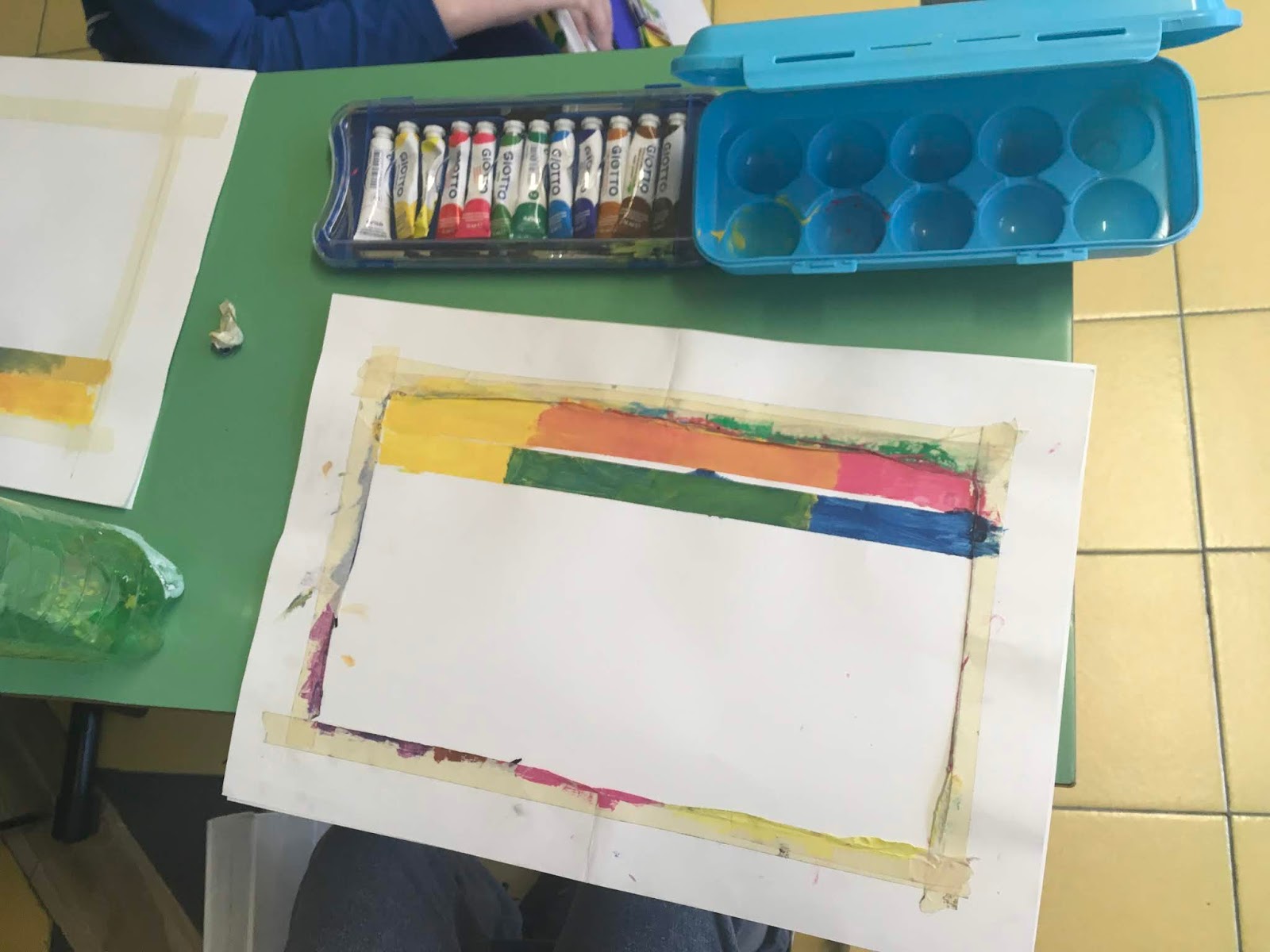
There has also been a moment for a practical part. The 1st year students have been working on the theory of color building chromatic scales with the primary colors, and the 2nd year ones have begun to work the light and shadows by constructing three-dimensional words and observing the shadows they produce and then reproduce them with the pencil. A very interesting and intense morning.


Buenos días desde Monterotondo,

Una de las experiencias más interesantes de ayer ha sido escuchar a los alumnos de 3° hablar sobre el tema que han elegido para el examen que hacen al final de la escuela secundaria de primer grado.

La educación artística tiene una parte teórica importante sobre historia del arte, y para este examen que hacen de manera oficial al final del primer grado de la secundaria, han de desarrollar un tema de su elección. Los temas que han elegido estos alumnos de último año van desde La evolución de la moda, pasando por la Importancia del color en el Puntillismo o la Violencia de género vista a través de la obra de la artista barroca Artemisa Gentileschi, hasta la Relación entre el fútbol y el arte inspirado en la obraPartita di calcio (Parido de futbol), del artista futurista italiano Carlo Carra.

También ha habido momento para a parte práctica. Los alumnos de 1º han estado trabajando la teoría del color creando escalas cromáticas con los colores primarios, y los de 2º han comenzado ha trabajar el claroscuro construyendo palabras tridimensionales y observando las sombras que producen para luego reproducirlas con el lápiz. Una mañana muy interesante e intensa.

jueves, 4 de abril de 2019

JOB SHADOWING IN MONTEROTONDO. ITALY

This is the diary for the Job Shadowing project of our Arts Secondary Teacher, Mertixell Puertas. Here you can find her  daily activities at the school, her experiences, reflections and learning during two intense week in one of our favorite schools, the secondary school IRC Giovagnoli, in Monterotondo, Italy.


Este es el diario del projecto de Job Shadowing de nuestra profesora de Arte de Secundaria, Meritxell Puertas. Aquí podréis encontrar sus actividades cotidianas en la escuela, sus experiencias, reflexiones y aprendizajes durante dos semanas intensas en uno de nuestras escuelas favoritas, las escuela secundaria IRC Giovagnoli en Monterotondo, Italia.

LAST LESSONS

On this occasion, we have dedicated part of the first lesson to increase our vocabulary and topics. Later on our teacher, Samantha, has...